
• English
  • हिन्दी
  • मराठी
  • ગુજરાતી
  • Afrikaans
  • Albanian
  • Amharic
  • Arabic
  • Armenian
  • Azerbaijani
  • Basque
  • Belarusian
  • Bengali
  • Bosnian
  • Bulgarian
  • Catalan
  • Chinese
  • Corsican
  • Croatian
  • Czech
  • Danish
  • Dutch
  • Estonian
  • Filipino
  • Finnish
  • French
  • Galician
  • German
  • Greek
  • Haitian Creole
  • Hebrew
  • Hungarian
  • Icelandic
  • Indonesian
  • Irish
  • Italian
  • Japanese
  • Kannada
  • Khmer
  • Korean
  • Kurdish
  • Kyrgyz
  • Latin
  • Latvian
  • Lithuanian
  • Luxembourgish
  • Macedonian
  • Malagasy
  • Malay
  • Malayalam
  • Maltese
  • Mongolian
  • Myanmar
  • Nepali
  • Norwegian
  • Pashto
  • Polish
  • Portuguese
  • Punjabi
  • Romanian
  • Russian
  • Samoan
  • Scottish Gaelic
  • Serbian
  • Sesotho
  • Shona
  • Sindhi
  • Sinhala
  • Slovak
  • Slovenian
  • Somali
  • Spanish
  • Swedish
  • Tajik
  • Tamil
  • Telugu
  • Thai
  • Turkish
  • Ukrainian
  • Urdu
  • Uzbek
  • Vietnamese
  • Welsh

Amma’s Tea Drinking Habit. at The No Tea Drinking Mahatma Gandhiji’s Wardha Asharam.
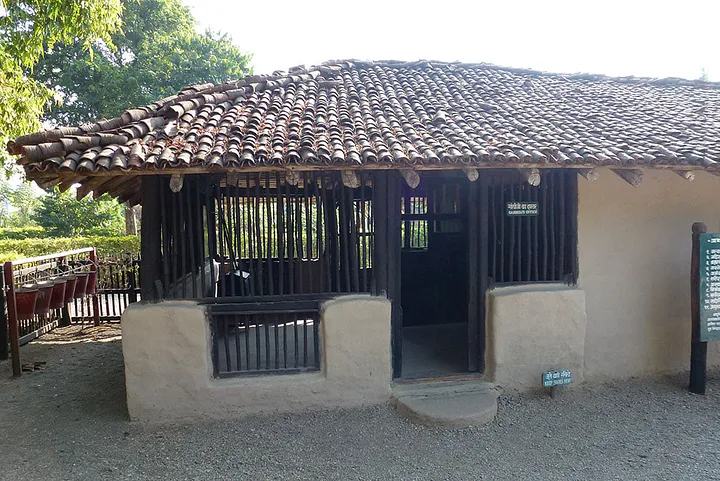
The old days work place

My mother’s tea-drinking habit in a no-tea zone (boycotted British goods) at Wardha Sevagram greatly helped create a solution for Mahatma Gandhi and Jamnalal Bajaj. Jamanalal Bajaj Great patriotic and desh bhakt, Jamanalal Bajaj. One of the very few businessmen who stayed continuously with Mahatma Gandhi in a hut or in remote places of India, […]

I am Niranjan Manilal Nautamlal Mehta. I was born into a genuine Gandhian heritage, hailing from a family committed to Gandhian principles since 1900. I found reading books solely authored by Mahatma and Mahadev Desai essential and engaging in research to express a Gandhian history, as my life has been profoundly intertwined with the heart, mind, and body of the Gandhian way of living and mindset.

My work at www.nautamlalmehta.com serves as a testament to my dedication.

My great-grandfather, Bhagwanji Narbheram, has maintained a connection with the Indian National Congress since its inception in 1885. My grandfather, Nautamal Bhagawanji Mehta, was notably active in the Surat Congress, which experienced its first split between Tilak and the moderate Gokhale and Rasbihari Ghose in 1907.

My grandfather, Nautamlal Bhagawanji Mehta, profoundly understood Mahatma Gandhi and his vision. He actively embodied Mahatma Gandhi’s vision and mindset, choosing not to remain confined to the ashram, but surrendering and sacrificing his inherited 600-year-old business and wealth for the cause of India’s independence. He inspired all his children and grandchildren to embrace the identity of free Bharatiyas, upholding the core values of Sanatan Dharma and Jainism, with humanity being paramount. All Gandhian leaders aspired to govern India free from foreign domination and dependency.

My grandfather Nautamal’s three sons, Manilal ( My father), were nearing the completion of his medical studies but opted to forgo his degree. His other son, Moolshankar, devoted his entire life to the Gandhian movement, advocating for India’s independence. He graduated from Ferguson College in Poona and was incarcerated four times, enduring severe injuries to his head during the “Dandi March.” The third son, Vajubhai, spent his entire life in Myanmar. During the Second World War, he and Manilal rescued over 5,000 Hindus and Muslims from chaos, looting, and violence amid the conflict between Japanese Buddhist followers and pro-British Hindus and Muslims. My father and uncle surrendered their millions $$$ dollars to save Hindus and Muslims. All documented and with evidence.

They neither sought publicity nor exploited their connections. This text represents valuable historical material belonging to the esteemed family of Nautamlal B. Mehta from Jetpur. The family has made significant contributions. They viewed their actions as a karmic duty rather than a sacrifice. The noble sacrifices made by Manilal and Vajubhai, two brothers, exemplified their commitment to “Mahanta” and “Atma Sarpan,” which translates to sacrificing with nobility and grace. They accepted their challenging circumstances with extraordinary dignity and composure, refraining from highlighting their sacrifices.

  1. Nautamlal Mehta was the first to refer to Gandhi as “Mahatma,” rather than Rabindranath Tagore.
  2. Five members of his family were imprisoned for their contributions to India’s struggle for freedom, including two women.
  3. They remained steadfast during the British Goods Boycott of 1930, undeterred by the potential consequences of their actions for their business interests.
  4. During World War II, in the Pyapon region of Burma, brothers Manilal and Vajubhai sheltered 5,500 Hindus and Muslims within their mill, protecting them from a large-scale massacre.

We could have engaged a book writer, film producer, or journalist to dramatize and publicize our historical material; however, such an approach would contravene our values and is unnecessary, as the documents speak for themselves with just a few lines. This historical material is invaluable to India’s rich heritage and can only be fully appreciated by those who profoundly understand Bharatiya Sanskar. Ultimately, recognizing its significance rests on discernment, logic, and judgment.

I must express my gratitude to my wife, Veena, and my two spirited daughters, Anjali and Riddhi, who have made extraordinary contributions, without which I would not have achieved this milestone. I am also thankful to the United States of America, my adopted motherland, for offering the necessary resources and understanding to fulfill my aspirations.

“Vande Mataram.” (Bow to my Motherland- India-USA)

“Sarva Mangalam.” (God protect all living beings and help them progress)